Rooted in Japan
Five places,
one line.
A lot of Verdelune passes through five hands before it reaches yours. Here is each of them, in order.
01
Uji, Kyoto Prefecture
34.88°N 135.79°E
Twenty-two days in the dark
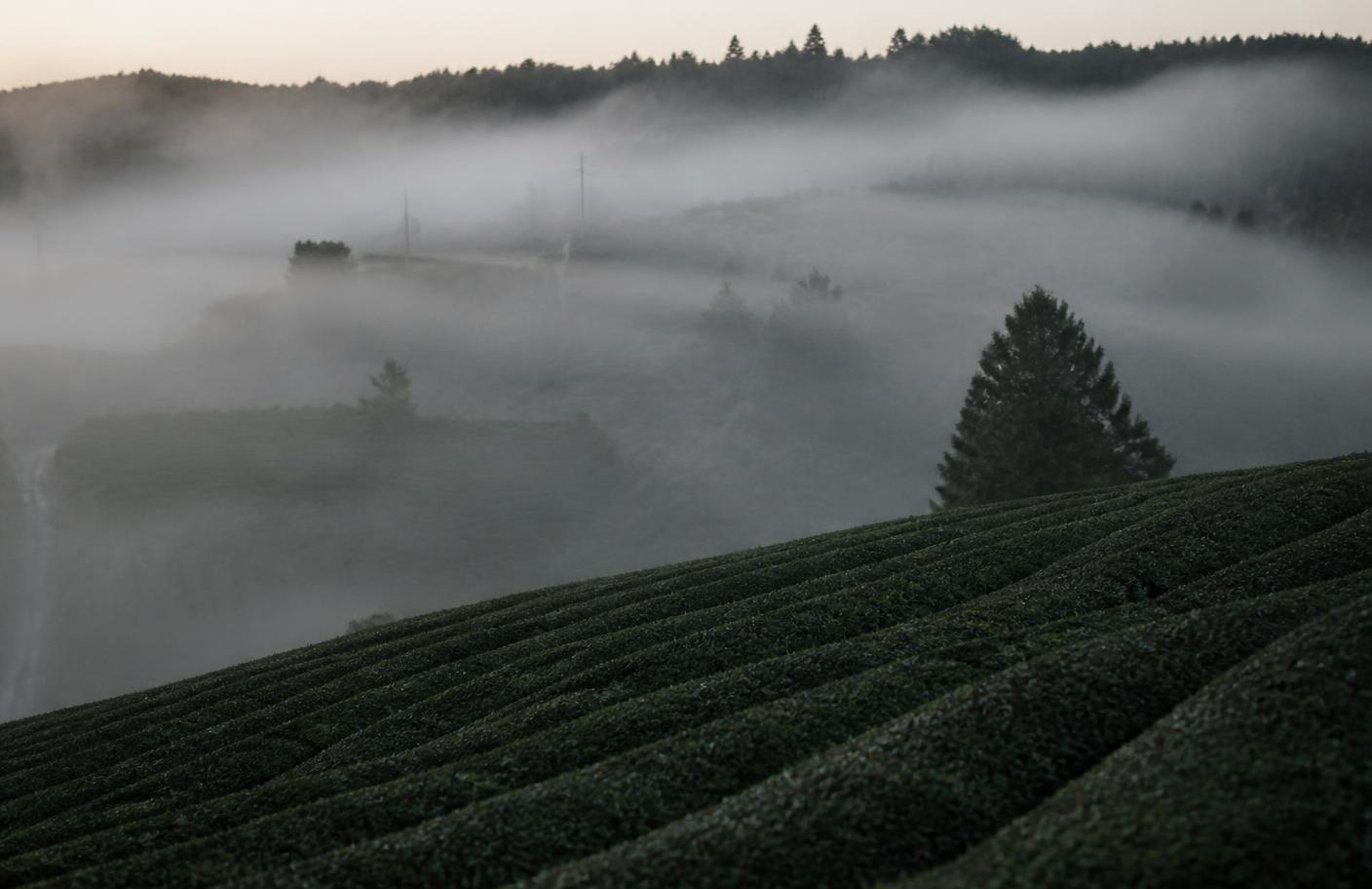
Straw and reed screens go over the rows in late April. Starved of light, the leaf floods itself with theanine — the reason ceremonial matcha tastes of broth rather than lawn.
02
Kirishima, Kagoshima
31.74°N 130.76°E
Four days of picking
Only the top bud and two leaves, taken by hand across the first four days of May. Our second grower, Nakamura-san, works nine hectares and sells to four buyers.
03
Wazuka steaming house
34.77°N 135.92°E
Eighteen seconds of steam
Steamed within hours of picking to stop oxidation dead, then air-dried and de-veined into tencha. Everything after this is subtraction.
04
The mill floor
34.88°N 135.80°E
Forty grams an hour
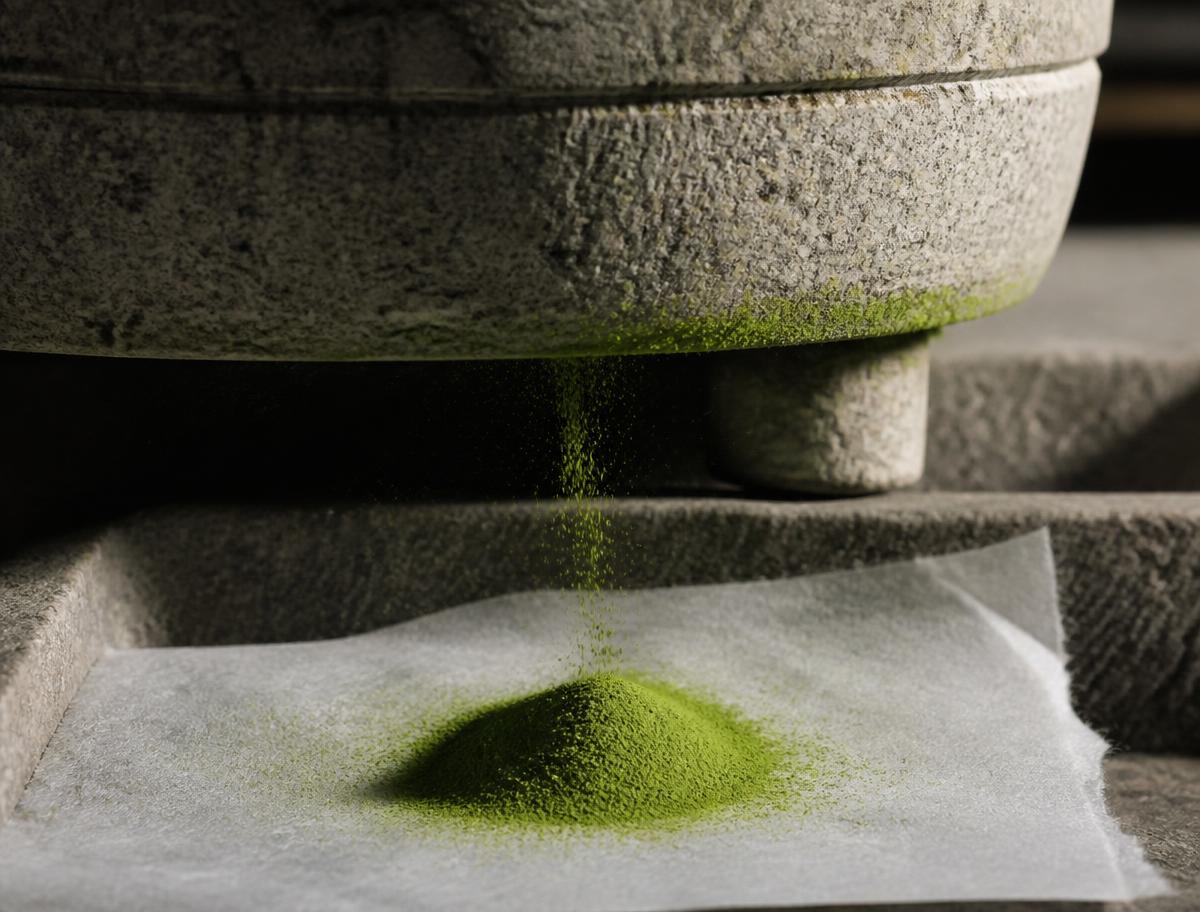
A granite wheel turns at thirty revolutions a minute. Faster and the friction heat scorches the aroma off. One kilo takes the better part of a day; nobody has found a shortcut worth taking.
05
Higashiyama-ku, Kyoto
34.99°N 135.78°E
Sealed within 48 hours
Nitrogen-flushed, foil-lined, dated by lot. Matcha begins to fade the moment it is milled, so we mill to order and ship what was ground this week.
What we commit to
Three promises, all inconvenient.
Direct, at their price
We buy from two families with no broker in between, and we pay the number they name. Our margin absorbs the harvest, not theirs.
No shade-cloth chemistry
Reed and straw screens instead of synthetic cloth. Slower, dearer, and it keeps the soil biology alive between seasons.
Ship less, ship slower
Sea freight, unbleached board, no plastic void fill. A tin may take eleven days. It will still be fresher than most.